
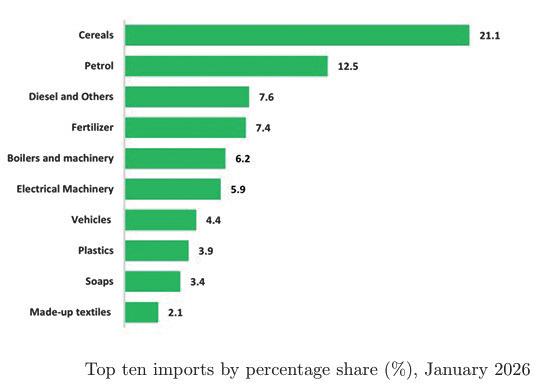
Malawi's trade deficit widened by 129 percent in January 2026, reaching $336.6 million (about K589 billion) compared to $146.8 million during the same period last year, according to data from the National Statistical Office reported by Nation Online. The trade gap was driven by a surge in imports to $390.7 million, while exports dropped to $54.1 million. The decline in export earnings has been further strained by recent United States trade policies. Following the introduction of a 17 percent US tariff and the temporary expiry of African Growth and Opportunity Act preferences, World Bank data shows that Malawi's tea exports to the US dropped by 79 percent, cane sugar by 66 percent, and tobacco by 53 percent, Nation Online reports.
In the mining sector, government revenue has plummeted following a ban on the export of raw and unprocessed minerals. The Department of Mining collected just K70 million in the 2025/26 fiscal year, representing an 89 percent drop from the projected K665.45 million, according to the 2026 Malawi Government Annual Economic Report cited by Nation Online. The revenue shortfall is directly attributed to an executive order issued last October aimed at promoting local value addition and job creation. Despite the revenue decline, the broader mining industry still grew by 5.3 percent in 2025, largely supported by increased domestic demand for rock aggregates in the construction sector.
Meanwhile, domestic utility providers continue to face severe financial pressures. Malawi's water boards posted billions of kwacha in collective losses for the 2025/26 fiscal year, losing approximately K70 billion to non-revenue water, Nation Online reports. System losses averaged 33.4 percent due to leaks and debt collection challenges, preventing the utilities from capitalising on recent tariff hikes.