
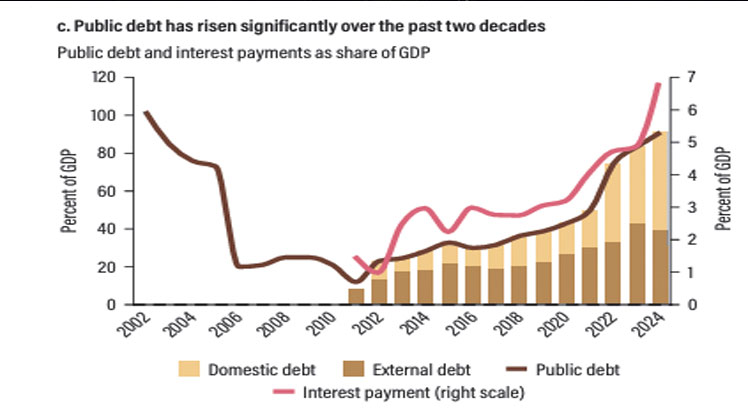
Update: Following the expiration of Malawi's Extended Credit Facility with the International Monetary Fund, the country's debt restructuring efforts have officially stalled, according to Nation Online. Citing the World Bank's April 2026 Africa Economic Update, the publication notes that the lapse of the 18-month program has complicated negotiations. Regional non-bonded commercial creditors have also emerged as a significant hurdle, compounding challenges for a country with a public debt stock of K23.9 trillion, which represents roughly 91 percent of its gross domestic product.
To manage its recently passed K10.98 trillion national budget and counter ongoing foreign aid cuts, the Malawian government is intensifying domestic revenue collection, Devex reports. Planned strategies include higher taxes, the automation of public fees, and the establishment of a sovereign wealth fund. However, economic analysts warn that expanding revenue streams will fail to stabilize the economy unless authorities address systemic corruption and financial leakages.
The broader macroeconomic outlook remains fragile. The World Bank projects real GDP growth for Malawi at around 2.3 to 2.7 percent for 2026, which tracks below the national population growth rate. High inflation, foreign exchange distortions, and a narrow export base continue to deter private investment and limit job creation, leaving the nation highly vulnerable to external shocks and persistent debt distress.