
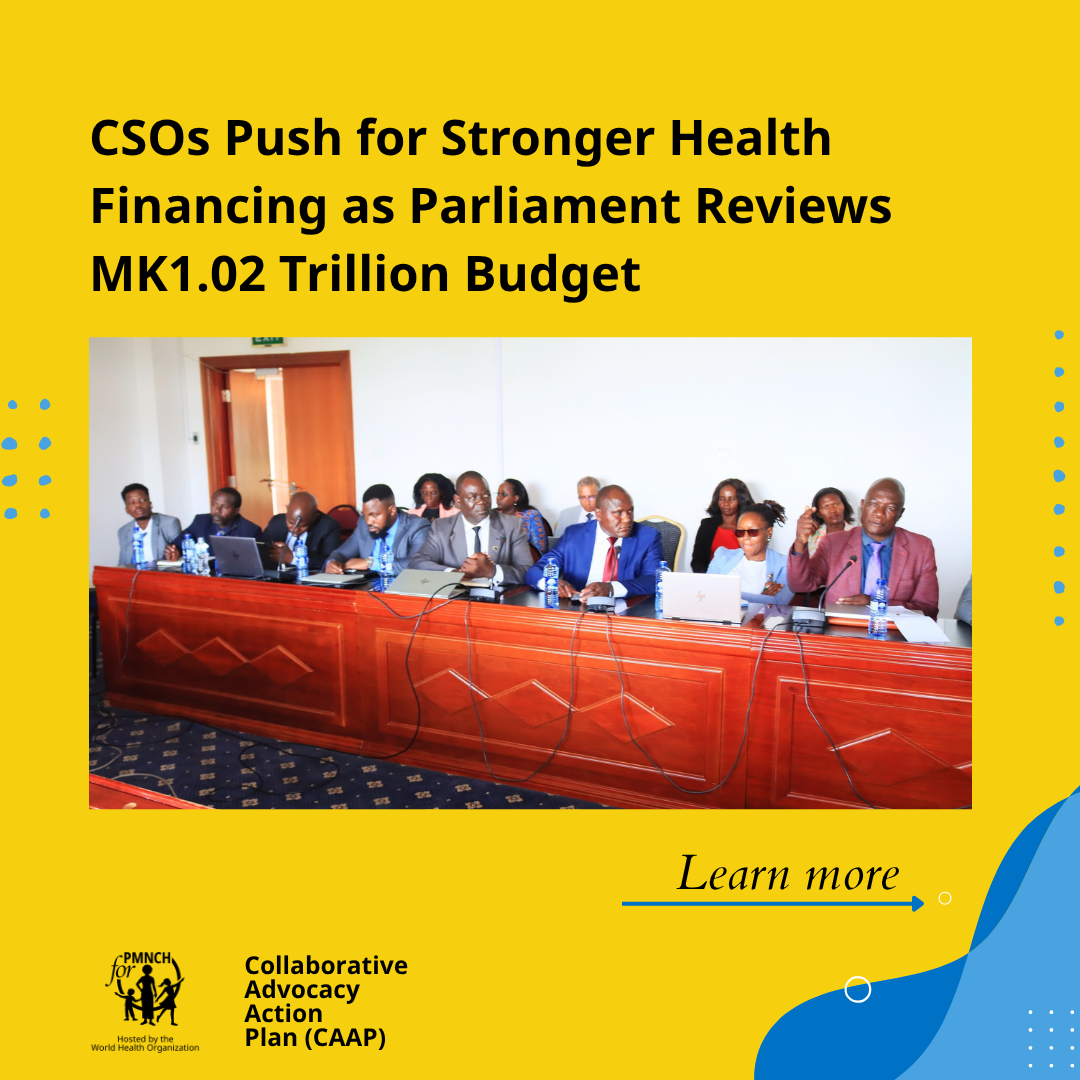
Civil society organisations in Malawi are urging Parliament to increase funding for women's, children's, and adolescents' health as lawmakers review a proposed MK1.02 trillion health allocation. According to Amref Malawi, advocates working under the Collaborative Advocacy Action Plan met with the Parliamentary Committee on Health this week to address recurring funding shortfalls.
The proposed health allocation currently stands at 9.2 percent of the national budget, falling short of the 15 percent target established by the Abuja Declaration. Activists have raised specific concerns over a 24 percent reduction in district health budgets, warning that the financial cuts could severely limit essential medical services in local facilities, according to Amref Malawi.
Despite recent progress highlighted in the 2024 Malawi Demographic Health Survey, which recorded maternal mortality dropping from 439 deaths per 100,000 live births in 2015 to 224 in 2024, stakeholders caution that these gains are at risk. The health sector currently faces a vacancy rate of approximately 54 percent for nurses and midwives, heavily straining the existing medical workforce.
Update: In broader public health developments, Malawi has officially commenced a 27-day training program for its second AVoHC-SURGE emergency responder cohort in Lilongwe. According to the World Health Organisation, the initiative brings together 104 multisectoral participants to improve the country's preparedness for overlapping health threats, including cholera, mpox, and climate-related disasters.